Farm Diversification – We Teach Social Media

Farm diversification usually seems to refer to on-farm businesses such as those that are related to food, animals or accommodation.  My new farm diversification business isn’t on-farm though – it is online and offers social media training. This has been a busy week as we’ve been working on finishing a new website (we refers to myself, Amanda of Spiderworking who is a co-organiser of the Blog Awards, and Marie my biz partner at Write on Track).

We Teach Social MediaWe launch We Teach Social today – offering social media courses online to English speaking people all over the world who have access to email and wish to learn how to use the various social media platforms for their business. We’re offering feedback to participants in all the courses which we see as extremely important.  We’re all passionate about social media and ensuring the people know how to use it properly, to their advantage, that they follow the rules and enjoy it.

We’ve put up 3 courses so far – Twitter for Beginners, How To Use Pinterest For Your Business, and Social Media for Charities, Clubs and Community Clubs. Upcoming courses will include Business Blogging, Personal Blogging, Social Media Competitions, Advanced Twitter, Advanced Pinterest, YouTube and more. We’re giving away a free course a month too to new subscribers to our newsletter so do sign up for notifications of upcoming courses too.

Don’t forget the #farmerettes from last week’s tweetup are going to be on RTE Countrywide this morning too. I’m also on KLCR radio on Sunday evening at 6pm in their ‘People in Profile’ programme talking about how I seem to change career every 5 years and what I’m up to at the moment.

Posted in Running a business, Social Media, Farmerettes | Tagged , , , , , | Leave a comment

A Peek At My Oul China

Here’s a glimpse of my home – or parts of it!  When we lived in England, we always lived in old terraced red brick houses and loved collecting antiques. We were busy renovating and decorating houses and seemed to spend all our money in DIY stores but we used to visit the local Salisbury auction almost every Friday night, and if something caught our eye, we’d stay and bid.  We also used to pick up smaller pieces in antique shops. I loved blue and white china and gathered some that cost more than we could afford and others that were going for a song.

I am admitting that I’m not the best with a camera – I tend to pull out the iphone, point and shoot!

Blue and white china on dresser

These sit at the end of the kitchen (stove is in the other corner) – it is proving to be a cosy corner to curl up in with a book and Will can be found there with a Harry Potter book every now and then :)

Kitchen Dresser

Mixed Crockery on DresserButter paddlesOur utility is quite a large square room with a sink and some cupboards, the usual washing machine etc but not being that domesticated, I wanted it to look rather non-utility looking as I walk through to the kitchen from the back door.  This was a mahogany dresser so we took the doors off and painted it. Brian extended the height and hence, it is kind of built in now!  As it has different sections, I’m using it to display my various colours and styles of crockery. My kenwood has been fixed so I really must do what I’ve been meaning to do for ages and make some butter and put those butter paddles to good use!Orange and Yellow

This little cup has 3 little feet and was a present from my mother-in-law – it’s one of my favourite pieces here. The serving plate is one of a set of 3. The smaller pieces are of art deco period and if I remember correctly, are Clarice Cliff though I might be wrong!

This tiny “doll’s house” tea set was something I fell in love with.
Blue and White Tea Set

I can still remember buying it in Marlborough and working out how to afford it.  It must have been hand fired as the saucers are quite uneven and one or two are unglazed underneath. The cups are so titchy, they just about fit on the end of my fingertips. One of my favourites.

Blue and white tea setThis other blue and white doll’s tea set is bigger in size, more uniform too which suggests it isn’t as old and was probably created in greater numbers. I can’t remember the price of either but this one wasn’t as dear.Bunnykins

This little set was a Christmas gift when I was a child and I ate from it regularly. The plate is chipped but heyho!

Mini tureenI like the colours of these too and another favourite is this little tureen. The serving spoon is of the same material and fits in through a neat little hole in the lid.

I’m definitely going to retire to a Victorian cottage and display them there too :)

Posted in Our Farm | Tagged , , , , , | 15 Comments

The #Farmerettes Tweet Up

Farmerettes at Cillin Hill MartIt was a dark, blustery and very unsummerlike day when I arrived at Cillin Hill mart for our #farmerettes tweet up. Organised some 2 months ago, the idea came from a couple of tweets and as always with determined and enthusiastic women, the date and venue was decided as the number of female farmers on twitter who wished to meet each other became 9.  Nine usernames were taking up too much space to  in tweets to each other so we started using the hashtag   farmerettes to tweet suggestions to each other as well as sharing photos, ideas and asking questions of each other.

Walking in the door of the mart – we all saw this sign – a nice touch :)  Farmerettes - We're famous!

Farmers engaging in a tweet up is still pretty unusual in Ireland, partly because the proportion of farmers tweeting is still pretty low let alone any of us arranging to meet up yet I was surprised when Louise Denvir from RTE Countrywide  contacted me with a view of covering our tweetup and finding out why we thought farmers should be engaging in social media.

The day consisted of a lovely meal with rib eye steak provided by Piementese Beef, lots and lots of chat, some tweeting and some interviews then by Irish Country Living and RTE Countrywide.  The mart has a lovely dining room upstairs and is perfect if you have a communion, christening, confirmation type of event coming up.

Farmerettes Tweet Up

I had met 3 of the others before, some hadn’t met any of us and we got on great. That’s the beauty of twitter, you chat so much that you reveal your personality and people get to know each other before they even meet up so there wasn’t one embarrassing silence – we just talked and talked!  Lots of topics were covered (in chat and in interviews) such as the fodder crisis, the benefits of social media for farmers, our different types of farming, food production, the cooking of food, the representation of women in farming and why we chose to use the hashtag farmerettes as well as Elaine and I using ‘farmerette’ in the names of our blogs.

One or two didn’t like the term farmerettes, preferring female farmer or woman farmer. The point was made that we don’t have ‘doctorette’, ‘solicitorette’  and that by using ‘farmerette’ we are exacerbating the glass ceiling and suggesting we aren’t serious farmers etc and I agree – but only to an extent! I chose the name ‘farmerette’ for my blog to reflect the fact that I am female and yes, I felt it also reflected that I am a part time farmer and a bit of a fair weather one at that. It’s my husband that puts in the 17 hour days and does all the nitty gritty.   Elaine said that as she is a full time farmer, getting mucky and wearing jeans and wellies, she likes to wear  a little make up and feel like a woman while working on the farm for six and a half days a week.

Farmerettes - Day Out

We chose #farmerettes for a bit of fun not to make any grand statement but when I started to think about it, the term farmer still has the connotations of being male. At long last, people realise that a doctor is male or female but I don’t believe it is the same for a farmer.  Using the term ‘farmerette’ isn’t serving to exacerbate that, but instead it highlights it. There are women farmers out there, just as there have been for generations.  There have been women who kept farms going. There’s many the farming couple of whom the man brought the milk to the creamery, the cattle to the mart, collected the cheques and many went to the pub. The wife was often at the farm looking after children, milking the cows, feeding calves, washing out milk churns or tanks, collecting and washing eggs, cooking meals and often waiting for handouts, not having her own name on the chequebook. Without such strong women, the farm just wouldn’t have kept going. When I was a teenager, my dad wasn’t at all keen on me learning how to milk the cows – not because he didn’t think that women couldn’t or shouldn’t but because he felt that women had to work hard enough and there should be no reason for a wife to milk the cows, it might be different if the husband was in cooking the dinner rather than sitting in an armchair or in the pub!

Yet, despite all their hard work for generations, women have been underrepresented in farming really. Features such as ‘My Farming Week’ in Irish Country Living and the increase in the number of female vets shows that there are many women involved in animal husbandry but I still think we’ve a way to go before a farmer is mentioned without people automatically thinking of a man. Perhaps the term ‘farmerette’ needs to be used for a while still and highlight this. Maybe it won’t be too long till farmer has connotations for both sexes. I like the way the Canadians emphasise the HER in RancHERS for females :)

Farmers Feed Families

Why the chicken logo? It belongs to Farmers Feed Families – you can check them out here and I’ll do a post soon on their progress of highlighting the work of farmers to non farming folk.

Anyway, these #farmerettes / female farmers / women farmers / farmers had a great time meeting each other for the first time and we’re looking forward to the next tweet up :)

Posted in Days Out, Farmer's Wife, Farmerettes, Garrendenny, Irish Farming | Tagged , , , , , , , | 9 Comments

#Farmerettes Tweet Up

I was interviewed some time ago for the Irish Examiner and it was featured this week in the Farming Supplement – with me even being shown on the masthead of the front page with Alex Ferguson below!!

Irish Examiner front page

The article was mainly about my blog, why I blog, why farmers should blog and tweet, about our #farmerettes tweet up which is happening tomorrow and a little about my social media businesses Write on Track and the soon-to-be-launched We Teach Social.

irish Farmerette in the Irish Examiner

The tweet up was organised some weeks ago – it grew out a conversation between 3 #farmerettes and we decided it would be good to meet up and put a face to the names, we then asked if others would like to join us and now there are 9 farmerettes going along, plus Aisling Hussey from Irish Country Living and Louise Denvir from RTE countrywide. Louise is going to be covering a story about the tweet up and we’ll be on the radio next Saturday morning.  I’ve only met a couple of the farmerettes so far and many of them haven’t met any of the others. I guess that is the beauty of twitter, you get to know people that are on the same wave length, with similar interests and if you’re in the same country, you just might get to meet in person. It is always a little nervewracking before meeting other tweeps as you wonder will they be the same in real life as they are on twitter – but it usually is the case :)

If you’d like to follow the progress of the tweetup and join in virtually tomorrow, just use the hashtag #farmerettes.  I’ll be tweeting lots tomorrow, with some photos too.

Irish Farmerette Family Photo

Here’s a couple more photos by Dylan Vaughan – the grass was looking pretty brown back in March!

Irish farmerette family photo


It was quite funny as Brian had been working in the meal shed and the cows could smell the meal on his wellingtons so they are started licking them!

Posted in Farmerettes, Garrendenny, Our Farm, Social Media | Tagged , , , , , | 3 Comments

AI on an Irish Dairy Farm

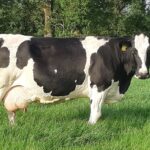
It’s AI season here on the farm at the moment, started on 1st May.  We use about 95% artificial insemination for our cows, just using a bull for some repeats (when a cow doesn’t go in calf on the first serving) if it is getting late in the season.  It is entirely possible for a cow to have many calves and still be theoretically a virgin!

Irish Dairy Cows waiting for the AI technican / queuing up at the local night club :)The dairy version of queuing at the night club – cows and heifers waiting for the AI technican

It’s always a big decision to decide which bulls to use – they are scored according to criteria such as milk, fertility, milk solids, calving interval, beef and ease of calving. We always use easy calving bulls on heifers for example.

The cows and heifers have to be monitored at the moment to check if they are in heat. Part of this is for financial reasons – the delay of a month in the birth of a calf can be €200 – this is due to loss of revenue for milk produced from the cow during the month and missing the month of thrive in the calf. Heifer calves have to be a recommended weight (330kg for a British friesien) at about a year old when they are being AI’ed to go in calf and bull calves will be going to the factory so the better the thrive, the better return. A late calf seems to take forever to catch up.  We also try to have a tight compact calving season – this year was almost too compact in that there seemed to be newborn calves absolutely everywhere for a week or two! The gestation is roughly 9 months so the first calves should be born around 1st February though some will always arrive early. We’d a lot of early calves with one particular AI bull this year which made the compact calving even busier!

When my son was about 5 and he used to see the AI man driving up the yard, he would say in a very ‘I know it all’ tone to his little sister “That’s the AI man and he’s going to put a seed into a cow which will grow into a calf”. I just knew he was picturing an apple seed!

There’s different methods for checking if a cow is on heat (they come on heat every 3 weeks if they’re not pregnant and all else is well). Many farmers will use paint on the ‘top tail’ area (called tailpaint) as cows on heat will jump on each other so if you’re a non farmer and you see cows with bright blue or red paint on their rumps, that’s the reason why! The paint will wear off if the cow is on heat (by being jumped on by other cows coming on heat).

Tailpainting heifers for AI

I’ll be honest – I’m useless at detecting if a cow is on heat, I have to see them jumping or standing while being jumped on in order to tell. Brian, on the other hand, doesn’t even use tailpaint with the cows, he knows them so well he can tell if their behaviour is affected such as if their ears are twitching, if their senses are more alert, that kind of thing. He did tailpaint the heifers this year – our AI technican recommended using lime mixed with water into a paste rather than ordinary paint. It works to a point.

Our submission rate for cows last year was 98% in first 3 weeks (this means that 98% of the cows were detected in heat and served with AI in the first 3 weeks of the AI season – cows go in heat every 3 weeks) with a conception rate of 72% which is considered good. Submission rate for heifers was also 98% with conception rate being 84%. Heifers tend to go in calf easier than cows – I guess increasing age doesn’t just affect humans!! There would be a higher conception rate to natural service ie a bull but AI is used frequently as it provides improved breeding.

Now for the vine video with the demonstration for AI.

It’s actually quite a delicate operation actually. The technican puts his left arm into the rectum so he can feel the ‘straw’ implement as it goes in and ensures it is in the right place before the semen is released. If it pushes in too far, it can kill the cow!

The first 50 days of pregnancy are very important in terms of energy balance with her diet and this is also why publications such as the Farmers Journal have been emphasising the importance of ensuring cows were in good fettle for going in calf – diet is so important.

We were delighted last year when one of our bull calves (named Garrendenny Lucifer) was purchased by Dovea as an AI bull and apparently his semen is selling very well :)

If you are wondering how to embed a vine video into your own blog post by the way, I have instructions on my Write on Track blog here for it.

And for a totally different change of topic – I’m closing down my online accessories store at Garrendenny Lane and the final day is Friday so do pop over to see if there’s a bargain that catches your eye. There’s some lovely things for Christmas or wedding gifts if you want to be organised! :)

Posted in Dairy farming, Garrendenny, Irish Farming, Social Media, Spring | Tagged , , , , | 4 Comments

Day Out At The Beach

We haven’t had a day out as a family in ages, months in fact.  The calving season is always busy but with the bad weather, farming has been more labour intensive with cattle having to be fed fodder and bedded instead of just being checked daily.  We’ve got the heifers out now, we usually run them after the cows in the fields near the house so we can keep an eye on them to see which ones are on heat (AI started last week) but with a shortage in grass, they’re on a field that is a tad further away.

Tramore Beach May 2013

We decided to head to the beach, the kids love it, they aren’t too keen on going for the long walks that we love to do but still love building sandcastles and splashing in the sea.  Too cold to go in too far today but they still enjoyed jumping around. We’re about 75 minutes from the beach so by the time the jobs are done in the morning and for us to get back for the evening jobs, there was only time for about 3.5 hours there. It was windy so we were glad of the windbreaker.

Tramore Beach

3 years ago this weekend we spent the bank holiday weekend at the beach, we were just trying to work out today how we managed to get away for the 3 days!!

Fish and Chips by the sea

A fish and chip supper went down well too! Essential for a day at the beach. ‘Naturally enough’, the farmerette drove and the farmer fell asleep, waking up to marvel at how fast the journey was going and to look at the cattle in fields as we passed.

Posted in Days Out | Tagged , , , , , | 1 Comment

Marriage For Irish Farmers Through the Ages

I’m somewhat amused (and tickled pink) to see that my post ‘Advice to those thinking of marrying a farmer‘ is now my most popular post, even surpassing my clotted cream recipe post. It seems that many people are wondering if it is a good idea to marry a farmer or not – I do hope my tongue in cheek post doesn’t put anyone off! ;)

Farmers haven’t always been seen as a good catch.  As depicted in the film Pilgrim Hill, farming can be a very isolated occupation, with the farmer living on an isolated farm, eking out a living and caring for an aged parent, usually a mother.  The age difference between husband and wife could be a couple of decades in some cases, partly because the man could be in his 40s or 50s before he could afford to marry.  His father might be died or die during the early years of marriage and the couple would share the same house as the mother-in–law who was still relatively young.  Apparently many farming bachelors in their 50s would have married young widows in their 40s and 50s.  My own grandmother would have been only 56 when my grandfather died from a heart attack aged 68.

Many women just didn’t want to marry farmers, they didn’t want to share a house with a mother-in-law, live in a draughty damp farmhouse and work themselves to death eking out a living too.  The bright lights of cities or emigration with promises of work, money, independence and future marriage beckoned.   Many siblings of the farming would probably have emigrated and it may be the youngest or oldest son who was left at home looking after the aged parents.

family farm photoPhoto source: Family Farm

When I was a child, I could never remember which couples around were brother and sister and which were married (as many married were childless).  It seemed to happen that the oldest siblings emigrated and two of the youngest would stay and farm.  They just didn’t have the independence or the finance to marry or else the opportunity didn’t present itself to fall in love. I remember calling in to see a neighbour in her 80s a few years ago, she was incredibly lonely and told me how she should have married, that then she’d have children and grandchildren. Feeling desperately sorry for her and not knowing what to say, I simply said that life wasn’t as easy back then and marriage wasn’t possible for many for one reason or another. She seemed to accept that as she remembered what it was like.

Money was required to marry I guess – the bride had to bring a dowry and I guess her family wanted to ensure that if she was bringing a dowry, that her future husband would have a decent enough farm.  Matchmaking was common then too, partly to create a merger between families of similar incomes. Remember the saga of the dowry in the film ‘The Quiet Man’.

Many authors have made the bachelor farming son and spinster farming daughter the focus of plays, poems and stories.

Extract from The Great Hunger by Patrick Kavanagh

Maguire was faithful to death

He stayed with his mother till she died

At the age of ninety-one.

She stayed too long,

Wife and mother in one.

When she died

The knuckle-bones were cutting the skin of her son’s backside

And he was sixty-five.

O he loved his mother

Above all others.

The Chastitute by J B KeaneJohn B Keane incorporated a bachelor farmer into his play The Chastitute and the same character into his book Letters of a Love Hungry Farmer. A Chastitute is a man without orders who remains celibate. John Bosco stayed unmarried while his mother was alive and when she died, he just didn’t know how to have a conversation with a woman, how to behave appropriately, how to ‘court’ a woman and both works go through his failures (some of which are funny e.g. being left holding rosary beads after attempting to get ‘romantic’ with his date), his escapades, his attempts to court his new housekeeper, conversations with his two matchmakers, his lack of social skills, his self doubt until he decided to call it a day.  Although the play and book have plenty of very funny moments, it is still very poignant and sad really.

The short story ‘The Ballroom of Romance‘ is perhaps one of the saddest, not because it isThe Ballroom of Romance told from a daughter’s point of view but just the way she accepts what will happen. Bridie is 36 and cares for her aged father on their small farm. She leaves the farm only to cycle to Mass, to the weekly dance, and once a month to town to do some shopping. Many of her friends are either working or married in cities in Ireland or abroad. Those she was in contact with seemed to envy her her life as they seemed tired from their endless pregnancies and large families yet Bridie yearned for marriage – not just for the company but also for the status.

She was becoming very conscious that spinsters in their 30s were a figure of fun amongst the younger girls at the weekly dance. She felt that Dano Ryan ‘would have done’ as a husband. He could have given up his job working for the council and helped her on the farm. She visualised the two of them working together and chatting to her father in the evenings. Dano lodged with a widow and her son and Bridie became aware on this particular night that he was going to marry his landlady.

The owner of the ballroom kept a sharp eye on activities during the night ‘It was the middle-aged men who required the watching. They came down from the hills like mountain goats, released from their mammies and from the smell of animals and soil’.

A conversation with Bowser Egan as they walked and cycled home revealed her future. She would never again go to the Ballroom of Romance, knowing she was becoming a figure of fun. Bowser’s mother was failing and would probably die within two years. She knew he would sell the farm, drink the money and then come to her for marriage and a roof over his head. Her father would probably be dead by then too and she would marry Bowser because it would be lonesome by herself in the farmhouse.

Life in rural farming communities weren’t necessarily easy!

Posted in Agricultural Issues, Books, Farmer's Wife, Farmerettes, Irish Traditions, Thoughts | Tagged , , , , , , | 2 Comments

Our Weekend – Milk Recording & Moving Calves

It’s 1st May on Wednesday – the beginning of summer allegedly!  A load of hay from Kent arrived at our local Glanbia creamery today with 48 large bales. We didn’t need any but there were plenty of farmers arriving with small trailers, there are a lot of older suckler farmers around here who have been drawing silage to their stock for the last two months.

We had planned to let the cows out tonight for the first night but they’d still need buffer feeding and we were running late due to Brian going to the mart today so rather than sorting out fencing, they’re being left in for another night. There were a few heavy showers today too so the land is wetter than we’d like although growth has eventually picked up.

Milk Recording

We milk recorded the cows last Friday – we do it via DIY milk recording so it means I’m involved too. The company delivers the metres which measure the volume of milk given by each cow. Each cow has an individual number that I input into a handheld monitor, then I click ‘select’ on the metre to check that it has recognised the number.  The volume of milk is measured for the morning and evening milking. During the evening milking, we take a sample from each cow’s milk – each vial has a barcode which then is matched to the cow’s individual number.

DIY Milk Recording

Then, in about a week’s time, we get a report showing information such as the cow’s length of lactation, volume of milk given, protein and butterfat contents. This is important information that contributes to our decision making when deciding on sires for the cows, which ones to cull, which ones to keep in the herd and the information also contributes to the cow’s Economic Breeding Index score.  There is no point in having a cow that gives huge volumes but it is mostly water instead of creamy milk and in the past, all we had to go on was volume!

It was remarkably calm in the milking parlour for the first recording of the year. I think we were both so tired that we just took our time rather than rush. It had been a busy day, I’d been longer with a client than I thought I’d be, we had to move calves which also took longer and it was nearly 8pm when we started milking!

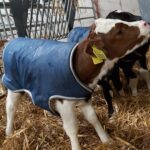
The calves are still in too, we just don’t have a dry enough field with enough shelter for 100 calves at the moment, in addition to keeping the cows out – the first batch of calves is weaned and are eating about 2 kgs of meal a day plus nibbling at straw.  The second batch will be weaned later this week. It is cheaper and more effective to feed them on meal than milk. We introduce meal at a few days old and initially they nibble at it and gradually their intake increases as they grow.  The third batch will be a few more weeks and the fourth are newborns, the late ones born over the last fortnight.  They are very cute compared to the big bruisers now in the larger sheds!

What's at the end of the rainbow

And we’ll settle for grass rather than gold at the end of this rainbow :)

Last but not least, I got a mention in yesterday’s Sunday Business Post. One of the things I love about small business owners is their innate ability to share knowledge and skills – they aren’t worried about others getting one up on them or of stealing their ideas. Maybe we’re a little naive but it’s lovely networking with other small business owners, especially women.  Many Carlow businesses were featured in SBP yest and one business Sign Management named me as her social media trainer and gave me a lovely mention.

Write on Track mentioned in Sunday Business Post

Posted in Dairy farming, Farmerettes, Irish Farming, Running a business, Social Media | Tagged , , , | 8 Comments

The Long Winter

Ireland’s winter has now been going on for almost 12 months – it started last May when we had to rehouse cows at night and with the ridiculously wet summer, it was tough going to keep cows out, cattle were in and out and getting silage cut for the winter was a challenge!

The fact at the moment is that numerous farmers are undergoing severe fodder shortages. Yes, there are farmers, mostly older ones, that weren’t aware the quality of their silage wasn’t good, they didn’t get it tested and hence didn’t supplement their animals feed sufficiently. Cows in calf to ‘big’ sires, giving birth to big calves, just didn’t have the strength to get up again after calving and many ‘went down’ even before calving. Vets have had to do more Caesarean sections than normal and also having to put cows out of their misery after the birth.  That is one problem. The other is that virtually all farmers are either completely out of fodder or nearing the end. We have about a week of silage left.  Normally the heifers come to the home farm to be inseminated at the beginning of May – there isn’t grass for the cows let alone the heifers – we’re looking at ways to supplement the silage both to make it last longer and to ensure that these heifers are still growing and will be well able to give birth next February.

Irish Cows Going Out

Many farmers are in dire straits – some just didn’t get to make enough fodder last summer, other parts of the country e.g. Cork are accustomed to turning their cows out as they calve from early February hence they would be used to preparing for ‘short’ winters and many have been low or out of fodder for weeks.  Cattle need roughage (hay, silage, straw, grass) in their diet, they can’t manage on concentrates alone.  This article in today’s Irish Examiner shows how farmers are being left to their own devices to cope with this unprecedented harsh winter. Our Agriculture minister has told banks and merchants to cut farmers some slack and extend credit. He has made €1million available to cover costs of transport of feed from the UK but it seems to be a dip in the ocean. As stated in the article, Teagasc always advises farmers to have 20% extra fodder available for emergencies but even that may not have been enough on some farms.

Crazy prices are being paid for bales of silage. Normally approximately €22-30 per bale, anything over that is extortionate especially regarding the probably low quality of silage from last summer.  According to sources on twitter and locally, silage bales have sold for as high as €56, one farmer bought 300 bales for €69 a piece and there was an auction in Kilkenny whereby 300 bales were sold in lots of ten at €73 a piece. Seeing people profit on other people’s misfortune leave a bad taste in my mouth and it always shows people’s desperation when they are paying those prices.  Farmers care about their animals and would prefer to go without food themselves than hear their animals bawl with the hunger. We got a few cows scanned today that weren’t cycling and the scanner said he isn’t seeing any thin cows – but then farmers who are working day to day and driving miles for bales of silage won’t be thinking about getting cows checked and starting AI, they’ll be trying to get some food for them!

Cows going to be milked

What makes me angry and very upset is a horrific story of a very recent suicide and it has been confirmed by twitter sources though I can’t find any reference to it in newspapers.  Apparently he went to his bank to look for credit to buy fodder for his animals and was refused. I don’t know if he was a dairy or suckler farmer but apparently some merchants aren’t extending credit to suckler or sheep farmers.  Having being refused by his bank (which was probably bailed out by the tax payers), he snapped, went home and shot his 40 cows before shooting himself. It is just horrific. The banks that were bailed out by the taxpayers can’t bail out a farmer. Now, I know we don’t have access to credit history or know anything about the case  but …… Simon Coveney was on the news today, releasing a helpline number, saying that no animals should starve, no farmer should be too proud to ask for help. Is it too little too late?

According to this report, there will be emergency assistance, no farmer should see his animal starve. But the fact is that many have starved already – or at least died or been put down as a result of malnutrition. Farmers aren’t looking for handouts but they do need the banks and the merchants to cut them some slack. The Glanbias and the Dairygolds aren’t going to go under. Farmers are sitting on assets, their land. The merchants will get paid eventually. The article also mentions the ‘strong commodity prices’ available at the moment! The milk price may be good but our dairy cows are selling for an average of €400 less than they were 4 years ago. We sold cows for €10K on Monday and gave one of our merchants a cheque for €11K on Tuesday – a tip of the iceberg! To be fair to that merchant, they haven’t put any pressure on us at all and always thank us sincerely for every order, even if it feels like we are ordering feed every second day!

Laura Ingalls Books

Over Christmas, I reread ‘The Long Winter’ by Laura Ingalls. Back in 1880, their small town had been all but abandoned by those in the East, who gave up trying to get food to them on the railway. Although they had killing their cow and horses as a last resort, the seven month winter meant that they were reduced to grinding the wheat for one loaf of bread per day and burning twisted hay in the fire.  That was 1880. It is now 2013. Transport is not a problem is terms of getting fodder to farmers – there’s hay coming in from the UK, some farmers still have surplus silage bales. As Coveney said, no animals should starve. No one should be driven to suicide either – not in this day and age.

It is hard to believe that next Wednesday will be 1st May – heaven help us if it is a poor summer.

Posted in Agricultural Issues, Beef Farming, Dairy farming, Spring | Tagged , , , , , , | 4 Comments

Wordless Wednesday – Old Stone Water Trough

Stone Water TroughOld Stone Water Trough


Posted in Garrendenny, Wordless Wednesday | Tagged , , | Leave a comment